
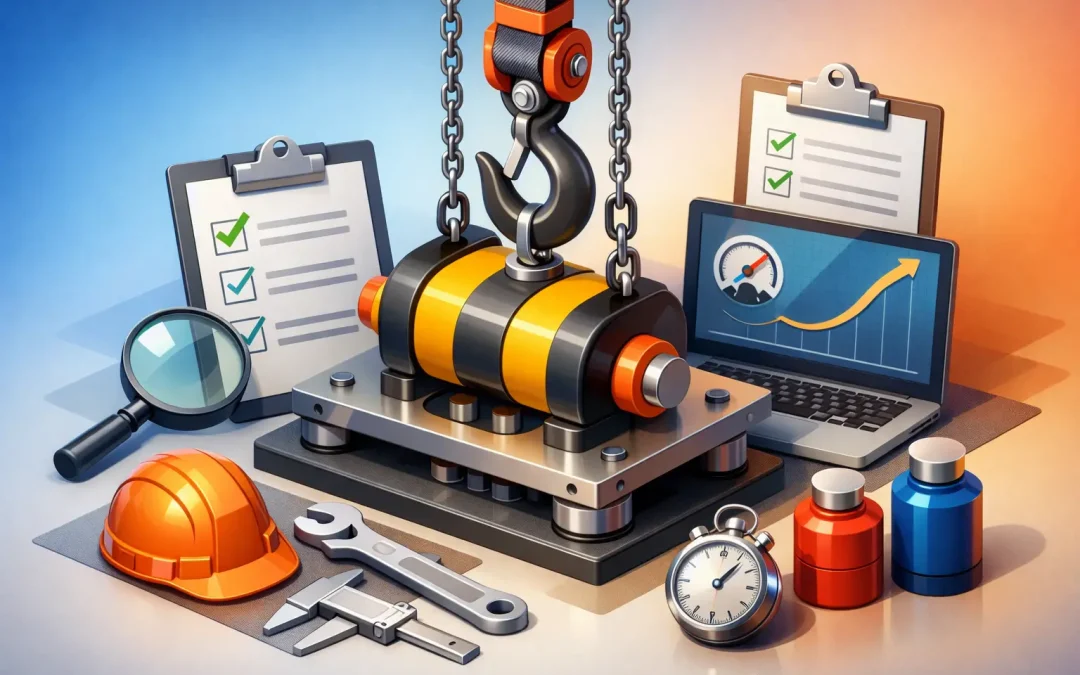
A failed inspection rarely starts with the test itself. Most delays happen earlier – missing paperwork, blocked access, incomplete rigging details, or equipment that is not actually ready to be loaded. If you need to know how to prepare for proof testing, the goal is simple: make sure the equipment, the site, and the documentation are all ready before the test crew arrives.
For contractors, rigging teams, maintenance supervisors, and project managers, preparation is what keeps the schedule intact. Proof testing is usually the last step before approval, turnover, or return to service. If anything is unclear on test day, you can lose hours or days chasing information that should have been settled in advance.
Why preparation matters before proof testing
Proof testing is not just a box to check. It is a documented process used to verify that equipment or a lifting system can handle a specified load under controlled conditions. Inspectors, owners, and safety teams rely on that documentation to approve use.
That means test readiness is about more than whether the equipment can pass. The service provider needs to know what is being tested, what standard or project requirement applies, what load is required, and how the test can be performed safely on site. If any of that is uncertain, the process slows down.
There is also a practical trade-off. Rushing a test without the right prep can create safety issues or lead to an invalid result. Overplanning can waste time if you treat every routine test like a major engineering event. The right approach depends on the equipment, the jobsite, and the compliance requirement driving the test.
How to prepare for proof testing without losing time
Start by confirming exactly what needs to be tested. That sounds obvious, but this is where many jobs get off track. A spreader bar, davit crane, hoist, lifting beam, padeye, rigging assembly, or custom fabricated component may each have different test expectations. If the item has a nameplate, serial number, rated capacity, or fabrication record, gather it early.
Next, confirm the required proof load. Do not assume the testing company will fill in that number from memory or apply a generic percentage. The required test load may come from a manufacturer specification, an engineering drawing, a project requirement, a governing standard, or an inspector’s direction. On some jobs, the difference between what is expected in the field and what is required on paper is where delays begin.
It also helps to define the scope in plain terms. Are you testing one item or an assembly? Is the test for initial certification, recertification, post-repair approval, or owner acceptance? Is a visual inspection part of the same visit, or is the need strictly proof load certification? Getting specific up front saves back-and-forth later.
Have your documents ready
Documentation is one of the fastest ways to shorten the process. At minimum, have any available drawings, load ratings, equipment identification, prior certifications, repair records, and customer or inspector requirements ready to share. If the equipment was modified or repaired, say so before the appointment. A repair that seems minor in the field may change what the testing provider needs to verify.
For custom lifting devices, document control matters even more. If there is no clear capacity marking, no drawing, or no traceable identification, testing can turn into an approval issue instead of a straightforward certification visit. That does not always stop the job, but it can change what is possible on the first trip.
If your site has onboarding requirements, include those too. Gate access, escorts, PPE rules, badging, marine terminal rules, shutdown windows, and restricted work hours all affect how the test is scheduled and executed.
Make sure the equipment is actually test-ready
This is different from being physically present. Test-ready means the item is assembled correctly, accessible, and in a condition suitable for loading. If bolts are missing, labels are unreadable, weld areas are coated over, or the unit is still being installed, the crew may not be able to proceed.
Take a hard look at the basics before the appointment. Is the equipment complete? Is the rated capacity legible? Are attachment points accessible? Can the item be isolated for testing if needed? If it is part of a larger system, can it be safely loaded without interfering with other operations?
For repaired equipment, confirm that the repair is finished and released for testing. For installed systems, confirm that the installation is complete enough to support the test method. If you are not sure, photos and a quick scope review before scheduling can prevent an unnecessary visit.
Site conditions that affect proof testing
A lot of teams focus on the device and forget the site. The test may be straightforward on paper but difficult in the field if there is no room to stage weights, no safe access path, or no clearance to load the equipment properly.
Think through the work area the same way you would for a lift. Is there enough space for the testing setup? Can the crew get in and out without disrupting critical operations? Will nearby trades create conflicts? If the test needs a controlled area, can that area be secured during the work?
Ground conditions, deck loading limits, overhead obstructions, weather exposure, and vessel or structure movement can also matter depending on the application. On some jobs, mobile service is the fastest option because the testing company comes to the site and works around your schedule. Even then, the site still has to support safe execution.
Coordinate access and timing
If your project is under inspection pressure, timing matters as much as the test itself. Schedule the work when the equipment, your responsible contact, and the test area will all be available at the same time. A common problem is booking the appointment before the asset is released by another trade or before site access is cleared.
Make sure one person on your side owns coordination. That person should be able to answer questions about the equipment, approve access, and verify what certification is needed. When nobody clearly owns the process, the testing crew ends up waiting on decisions that should already be settled.
If the jobsite is active, notify affected crews in advance. Proof testing may require temporary restrictions in the area, and surprises create friction. A ten-minute heads-up meeting can save a half-day delay.
What to tell your testing provider in advance
If you want a fast turnaround, send useful information early. The testing provider should know what the item is, where it is located, what it is rated for, what proof load is required, and whether the test is tied to a deadline, inspection, shutdown, or return-to-service need.
Photos help. So do dimensions, equipment weight, access constraints, and any unusual rigging or support conditions. If your site has special rules, mention them up front instead of on arrival. The more clearly the scope is defined, the easier it is to bring the right setup and avoid a second trip.
This is especially true for nonstandard applications. A routine shop test and an in-place field certification are not the same job. Neither is a simple beam test versus a custom lifting frame on a live industrial site. It depends on the equipment and what your inspector needs documented.
Common mistakes that delay testing
Most delays come from a short list of preventable issues. The wrong equipment is identified for testing, the required proof load is not confirmed, the site is not accessible, or the responsible contact is unavailable. Sometimes the asset is still under fabrication or repair when the test is scheduled.
Another common issue is assuming all certification requirements are identical. They are not. Owner requirements, project specs, and inspector expectations can vary. What passed on one job may not satisfy another if the documentation or test criteria are different.
There is also the issue of incomplete communication. If the testing company is told only that a crane or lifting device needs certification, that is not enough to plan efficiently. Clear scope saves time.
After the test, keep the paperwork organized
Preparation does not end when the load comes off. Once the test is complete, make sure the certification records go where they need to go – project files, safety records, asset management systems, or inspector turnover packages. If the equipment has a recurring certification interval, track the next due date before it becomes urgent.
That is one reason many crews prefer working with a field service provider that understands compliance timelines and jobsite pressure. Pacific Load Testing is built around that reality with mobile service and a straightforward approach: get the equipment tested, get the documentation in order, and help keep the job moving.
If you are preparing for proof testing, the best move is to treat it like a schedule-critical operation, not an afterthought. A little prep on the front end usually means less downtime, fewer surprises, and a cleaner path to approval when it counts.