
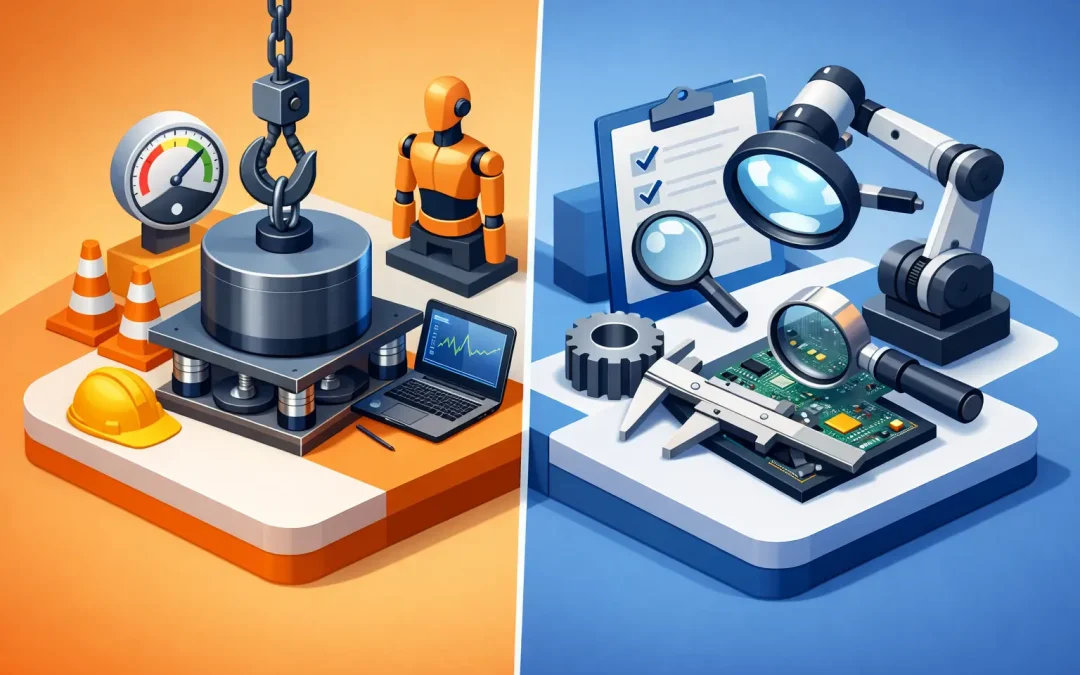
A crane is on site, the crew is ready, and the inspector asks for documentation. That is usually when the difference between proof testing vs inspection stops being a technical detail and starts affecting the schedule. If you are responsible for lifting equipment, rigging systems, or jobsite compliance, knowing which one is required can save you from downtime, failed approvals, and expensive rescheduling.
For contractors and operators, these two terms often get used together, but they are not the same thing. They serve different purposes, produce different records, and answer different questions about whether equipment is ready for use. If you treat an inspection like proof testing, or assume proof testing replaces inspection, you can end up short on documentation when it matters most.
Proof testing vs inspection: the core difference
The simplest way to separate them is this: inspection looks for visible condition and compliance issues, while proof testing demonstrates that an item or system can handle a specified load under controlled conditions.
An inspection is generally a visual and functional review. It focuses on condition, wear, damage, missing components, labeling, configuration, and whether the equipment appears suitable for service. Depending on the equipment, the inspector may check dimensions, connections, safety features, and signs of deformation or fatigue. The goal is to identify defects or conditions that could make the equipment unsafe or noncompliant.
Proof testing is different. It applies a defined test load to verify performance and document that the equipment or assembly can withstand the required load criteria. That matters when a governing standard, a customer requirement, or a site inspector needs objective evidence that the equipment has been tested and certified for service.
In practical terms, inspection asks, Does this look correct and serviceable? Proof testing asks, Can this item or system perform under the required load, and is there documentation to prove it?
Why the difference matters on a jobsite
On paper, the distinction seems straightforward. In the field, it gets messy because schedule pressure pushes teams to treat all compliance steps as interchangeable. They are not.
A visual inspection may be enough for routine checks, periodic condition review, or pre-use verification, depending on the equipment and the standard in play. But if a project specification, lifting plan, engineer, port requirement, or third-party inspector calls for proof load certification, an inspection report will not fill that gap.
The reverse is also true. Passing a proof test does not automatically replace the need for ongoing inspection. Equipment can pass a load test and still develop wear, damage, corrosion, or misuse issues later. A test confirms performance at the time of testing under defined conditions. It does not excuse poor condition monitoring afterward.
That is why experienced project teams treat proof testing and inspection as related but separate parts of readiness. One supports documented load verification. The other supports safe condition and continued serviceability.
What an inspection typically covers
Inspection scope varies by equipment type, usage, and regulatory standard, but the process usually centers on condition and conformance. That can include checking for cracked welds, bent hardware, elongated holes, damaged hooks, missing tags, corrosion, abrasion, broken strands, distorted fittings, and signs of overload.
For lifting and rigging gear, inspection may also include confirming manufacturer markings, capacity labels, identification numbers, and proper assembly. If a shackle pin is incorrect, a sling tag is unreadable, or a spreader bar shows deformation, those issues may trigger rejection even before any test is considered.
Some inspections are frequent and routine, performed before use or during normal operations. Others are periodic and more formal, requiring documented review by a qualified person. The timing and depth depend on how the equipment is used, how often it is exposed to harsh conditions, and what the applicable standard requires.
Inspection is often the first filter. It can catch obvious problems before a load is ever applied.
What proof testing typically covers
Proof testing applies a controlled load to equipment or a lifting assembly to verify that it meets a specified requirement. The exact test load, method, and acceptance criteria depend on the equipment and the governing standard or project specification.
This is not an improvised field check. Done properly, proof testing is a documented process with defined parameters, traceable records, and certification that can be presented to inspectors, owners, or safety personnel. For many lifting applications, that paperwork is what clears the equipment for approval.
Common situations where proof testing may be required include newly fabricated lifting devices, repaired equipment, modified assemblies, below-the-hook devices, anchors, padeyes, and other load-bearing components where the owner or authority having jurisdiction wants demonstrated capacity before service.
There is also a timing issue. Proof testing often needs to happen before the equipment reaches active use on a project. If teams wait until the last minute, they create their own delay. The inspector is not holding up the job. The missing certification is.
When you need one, the other, or both
This is where the answer becomes, it depends.
If you are dealing with routine in-service equipment that only requires regular visual or periodic condition checks, inspection may be the main requirement. If you are introducing a custom lifting beam, a repaired rigging component, or equipment subject to a specific proof load requirement, proof testing may be mandatory before approval.
In many real-world cases, you need both. The equipment is inspected first to confirm it is in suitable condition for testing. Then it is proof tested to generate the certification required for release or use. Afterward, it returns to an inspection cycle during service.
That sequence matters because a proof test should not be used to discover obvious defects that a competent inspection should have caught first. Testing damaged or improperly assembled gear creates unnecessary risk and can compromise the very documentation you need.
For project supervisors and equipment managers, the safest approach is to confirm the requirement early. Ask what the inspector, customer, engineer, or governing standard expects to see. If the answer includes certified load documentation, schedule proof testing. If it calls for ongoing condition checks, keep the inspection program current. If it calls for both, treat both as required and separate.
The documentation side is often the deciding factor
A lot of confusion around proof testing vs inspection comes down to paperwork. On a busy project, people may know the equipment is good, but that is not the same as having the right documentation in hand.
Inspection records usually show that an item was reviewed for condition and found acceptable or unacceptable based on the inspection criteria. Proof test records show that the item or assembly was subjected to a defined load and met the test requirement. Those are different records with different value during an audit, site review, or release process.
If an inspector asks for proof load certification, a visual inspection checklist will not satisfy that request. If your internal safety process requires routine documented inspections, a past proof test certificate does not show present condition. Both documents matter, but they solve different compliance problems.
This is especially true on fast-moving commercial and industrial jobs where approval windows are narrow. The right documentation keeps work moving. Missing or mismatched paperwork can stop a job just as quickly as damaged equipment.
How to avoid delays and failed approvals
The best way to avoid confusion is to stop treating testing and inspection as a single box to check. Build them into your project timeline based on the actual requirement.
Start by identifying the equipment or assembly that will be reviewed. Then confirm whether the applicable standard, project specification, or site inspector requires inspection, proof testing, or both. If proof testing is needed, schedule it early enough to allow for any issues, retesting, or paperwork processing. If the equipment has been modified or repaired, assume the documentation requirement may be higher, not lower.
It also helps to work with a provider that understands jobsite timing and certification requirements, not just the test itself. For San Diego contractors and operators dealing with lifting compliance, mobile service and fast turnaround are not convenience features. They are schedule protection. Pacific Load Testing is built around that reality.
Proof testing vs inspection is not a small detail
If you manage equipment approvals, the difference affects safety, compliance, and production. Inspection helps identify condition problems before use. Proof testing demonstrates capacity under a controlled load and creates the certification many projects require before release.
Getting that distinction right keeps crews from waiting on paperwork, keeps inspectors from rejecting equipment for avoidable reasons, and keeps your project from losing time over the wrong assumption. When the requirement is clear and the documentation matches it, the work can move.