
If an inspector asks for a spreader bar proof load test, the job usually does not move forward until the documentation is in hand. That is the reality on construction sites, marine terminals, industrial facilities, and rigging operations where below-the-hook equipment must be verified before use. When schedules are tight, the real issue is not just the test itself. It is getting the spreader bar certified correctly, with clear records, and without creating more downtime than the lift already demands.
What a spreader bar proof load test actually does
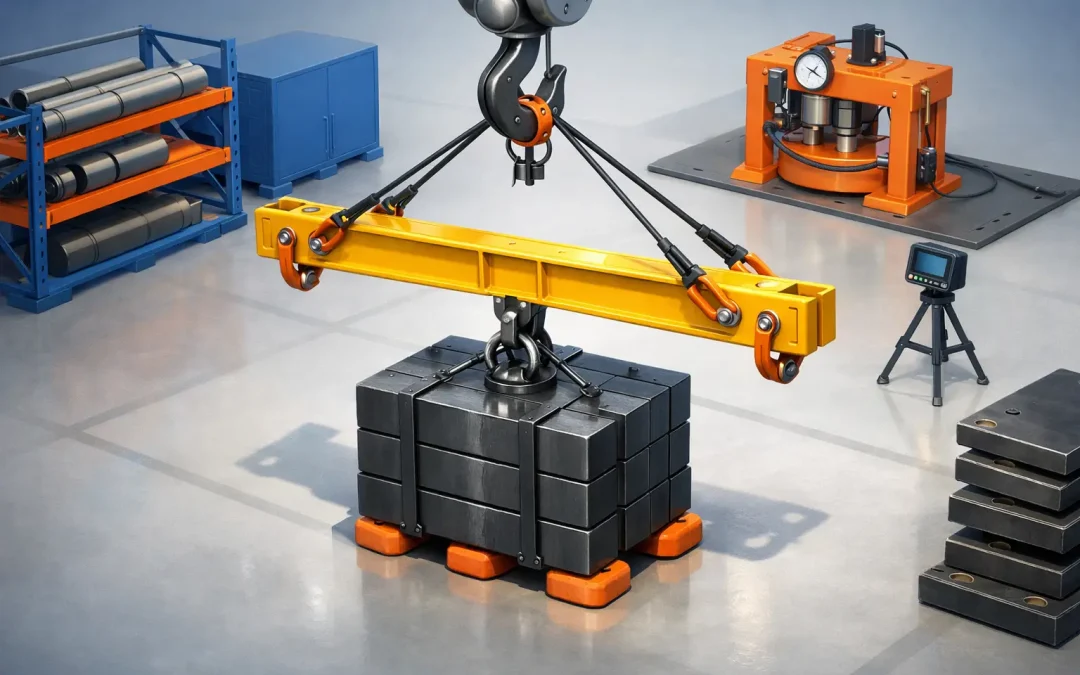
A spreader bar proof load test verifies that the bar can safely handle a specified test load under controlled conditions. The goal is not to guess whether the unit is probably fine. The goal is to apply a defined load, observe performance, inspect for deformation or damage, and produce documentation that shows the equipment was tested to the required standard or project requirement.
For contractors and rigging teams, that paperwork matters as much as the physical test. A spreader bar can look clean, have a visible tag, and still fail to satisfy an inspector if the proof load certification is missing, outdated, or incomplete. On many jobs, no documentation means no approval.
This is especially important with spreader bars because they are often used in critical lifts, uneven load handling, and situations where load control matters just as much as raw lifting capacity. A failure in the bar, end fittings, pad eyes, or connection points is not a minor problem. It can shut down a project and put people at risk.
When a spreader bar proof load test is typically required
The need for testing depends on the application, the owner’s policies, the project specifications, and what the authority having jurisdiction wants to see. In practice, spreader bar proof load testing often comes up before first use, after fabrication, after repair, after modification, after an overload event, or when a piece of equipment has been out of documented service long enough that its status is questioned.
Some customers call because they are commissioning a newly fabricated bar and need certification before it goes into rotation. Others are reacting to an inspection issue. The bar may already be on site, but the inspector wants current proof load records before sign-off. In both cases, timing matters. Delays in testing can turn into delays in crane work, deliveries, steel setting, equipment placement, or shutdown maintenance.
It also depends on who owns the requirement. A general contractor, third-party inspector, safety manager, port operator, or customer representative may all have slightly different expectations for what the test package must include. That is why experienced testing support matters. Passing the load is one part of the job. Producing the right certification package is the other.
How the test is performed
A proper spreader bar proof load test starts with identifying the equipment and confirming the target load, rated capacity, dimensions, and connection details. Before any load is applied, the bar should be visually inspected for obvious defects such as cracks, bent members, damaged welds, elongated holes, worn pins, mismatched hardware, corrosion, or illegible identification markings.
From there, the bar is set up in a controlled testing arrangement using calibrated equipment. The exact setup varies with the design of the spreader bar and the project requirement. Some bars are simple fixed units. Others include adjustable spans, multiple pick points, or specialized end connections. The test has to reflect how the equipment is intended to be used, not just what is convenient in the yard.
The proof load is then applied to the specified level and held as required. During that process, technicians are watching for signs of distress, instability, permanent deformation, or issues at the welds and connection points. After the load is removed, the bar is inspected again. If it meets the criteria, the results are documented and certification can be issued.
The exact proof load percentage depends on the governing requirement. That is one area where assumptions create problems. Different standards, customer specifications, and engineering requirements may call for different test loads or acceptance criteria. If the wrong standard is used, the test may not satisfy the inspector even if the bar physically performs well.
What inspectors and project teams usually want to see
Most high-intent customers are not looking for a long technical lecture. They need a clean answer to a simple question: will this certification hold up when the paperwork gets reviewed?
That means the documentation should clearly identify the spreader bar, the date of testing, the applied test load, the result, and the party performing the work. If the bar has a serial number, capacity marking, drawing reference, or asset ID, those details should match the records. If the equipment was repaired or modified before testing, that should be reflected too.
In many cases, documentation issues create more delay than the test itself. A certificate that is vague, missing equipment identifiers, or disconnected from the actual bar on site can trigger follow-up questions. That is the kind of avoidable friction project teams do not have time for.
Why field conditions change the testing plan
On paper, a spreader bar test sounds straightforward. In the field, the answer is often more complicated. Access limits, crane availability, equipment size, jobsite traffic, shutdown windows, and customer safety protocols all affect how the testing can be performed.
That is why mobile service matters. If the equipment has to be pulled out of a schedule-critical site and sent through a slow off-site process, the job can lose days. For many contractors, the better option is to work with a provider that can coordinate around the site conditions, complete the test efficiently, and get the certification turned around fast. Pacific Load Testing is built around that reality with mobile service for customers who need compliance without dragging out the schedule.
There is also the issue of equipment configuration. Adjustable spreader bars, bars used with custom rigging assemblies, and bars that have seen hard service may need closer review before testing begins. Sometimes the equipment is ready to go. Sometimes it needs repair, identification updates, or clarification on rated use before a valid test can even happen.
Common problems that can hold up certification
The most common issue is incomplete information. A customer may know the bar needs testing, but not have the rated capacity, fabrication data, prior certification, or intended proof load requirement available. That does not always stop the process, but it can slow it down.
Another problem is damage that shows up during pre-test inspection. Bent members, questionable weld conditions, damaged shackles, or non-matching components can prevent a valid certification from being issued until the issue is addressed. That is not a paperwork problem. It is a safety problem.
The third issue is assuming every spreader bar is tested the same way. It is not. A simple fabricated bar and a multi-point engineered lifting beam do not always follow the same testing path. The right approach depends on design, use, and required documentation. When the testing plan matches the equipment and the inspection requirement from the start, approvals go much faster.
How to prepare for a spreader bar proof load test
If you need fast turnaround, a little preparation helps. Have the spreader bar’s rated capacity, dimensions, serial number or ID, and any existing drawings or prior certifications ready. If the bar was repaired, modified, or overloaded, say so up front. That is not something to bury. It directly affects how the test should be handled.
It also helps to know who is asking for the certification and what they expect. A city inspector, private project inspector, refinery owner, or port customer may each require slightly different supporting details. When those requirements are clear early, the test can be set up correctly the first time.
If the bar is already on a jobsite, think through access and scheduling. Can the testing crew reach the equipment safely? Is there a shutdown window? Does the site require escorts, orientations, or special coordination? These details are not small. They often decide whether the job gets done in one visit or turns into a delay.
The real value is keeping the job moving
A spreader bar proof load test is about compliance, but for most project teams the bigger issue is operational readiness. You need equipment that is verified, documented, and ready for inspection. You need the testing done without wasting a crane day or stalling a lift plan. And you need a certification package that answers questions instead of creating new ones.
That is why speed and accuracy go together. Fast service does not help if the paperwork gets rejected. Technical accuracy does not help if the turnaround misses the work window. The right testing partner understands both sides of the problem.
If your spreader bar is holding up a project, the next step is simple. Get the equipment reviewed, get the test set correctly, and get the certification in hand so the lift can move forward.