
A lifting plan can be ready, the crew can be mobilized, and the equipment can be on site – but the work may still stop if required certification is missing. A load testing inspection gives project teams the documented proof they need to show that lifting equipment or a lifting system has been tested for its intended use.
For contractors, rigging crews, maintenance teams, and marine operators, the issue is rarely academic. An inspector, owner representative, safety manager, or site requirement may call for current proof load test documentation before equipment is released for service. Getting that requirement handled early keeps a certification issue from becoming a schedule issue.
What a Load Testing Inspection Verifies
A load testing inspection combines two necessary parts of equipment approval: a physical evaluation of the item and a controlled application of test load. The inspection looks for visible conditions that could affect safe use, such as distortion, cracking, worn components, damaged identification markings, improper modifications, or missing hardware. The load test then verifies performance under a specified load and controlled conditions.
The exact process depends on the equipment, its rated capacity, the applicable standard or project specification, and the authority requiring the test. A lifting beam, spreader bar, padeye, hoist, below-the-hook device, personnel platform, or custom rigging assembly may each require a different test setup and acceptance criteria.
The purpose is not to make a vague statement that equipment is “good.” It is to document that a specific item was identified, examined, tested as required, and found acceptable for service under the stated conditions. That distinction matters when a jobsite inspector asks for paperwork tied to the actual equipment in use.
When Proof Load Testing Is Required
Proof load testing is often required before new, modified, repaired, fabricated, or custom lifting equipment can be placed into service. It may also be required at intervals set by a customer, port, project owner, governing standard, manufacturer, or internal safety program.
Common situations include equipment that has been repaired or altered, lifting devices built for a specific project, hardware with incomplete certification records, equipment being transferred to a new site, and lifting systems subject to owner or third-party inspection requirements. In some cases, the equipment may be physically sound but cannot be approved because its documentation is outdated or unavailable.
This is why the timing matters. Do not wait until the morning of a critical lift to determine whether a current test certificate is required. Review project requirements while equipment is being selected or fabricated. If testing is needed, schedule it before the item becomes a critical-path dependency.
Inspection Is Not the Same as a Proof Test
A visual inspection and a proof load test support each other, but one does not automatically replace the other. A visual inspection may identify obvious damage, corrosion, missing tags, or incorrect assembly. It cannot confirm how an item performs under a controlled test load.
Likewise, a successful test does not remove the need for routine pre-use and periodic inspections. Lifting equipment can be damaged after certification through overloading, impact, heat exposure, corrosion, unauthorized repair, or improper storage. Operators and qualified personnel still need to inspect equipment at the intervals required for the work.
For jobsite approval, the practical question is simple: what does the inspector or project specification require? If the requirement calls for proof load testing and certification, a general inspection report may not be enough. Confirm the documentation requirement before mobilizing the equipment.
What to Have Ready Before Testing
Testing moves faster when the equipment and information are ready before the technician arrives. At minimum, the item should have a clear description, rated capacity, identification number or serial number when available, and any manufacturer documentation or prior records that apply. For custom equipment, drawings, fabrication details, and the intended use can help establish the correct test approach.
The equipment also needs to be accessible. If a lifting beam is buried behind materials, a spreader bar is still installed high in a structure, or a rigging assembly is missing components, testing may need to be delayed. Make sure there is room to stage the item, connect test equipment safely, and observe the test without putting nearby personnel at risk.
For larger or installed systems, site conditions matter just as much as the equipment itself. Access restrictions, lifting support, available power, work permits, traffic control, and site safety rules can affect the schedule. A mobile testing provider can reduce transportation delays, but the jobsite still needs to be prepared for safe, efficient work.
How the Testing Process Typically Works
The work starts by confirming the equipment identity, capacity, configuration, and testing requirement. The technician examines the item and checks that the planned setup matches the equipment being certified. If a condition raises a safety concern, it should be addressed before a load is applied.
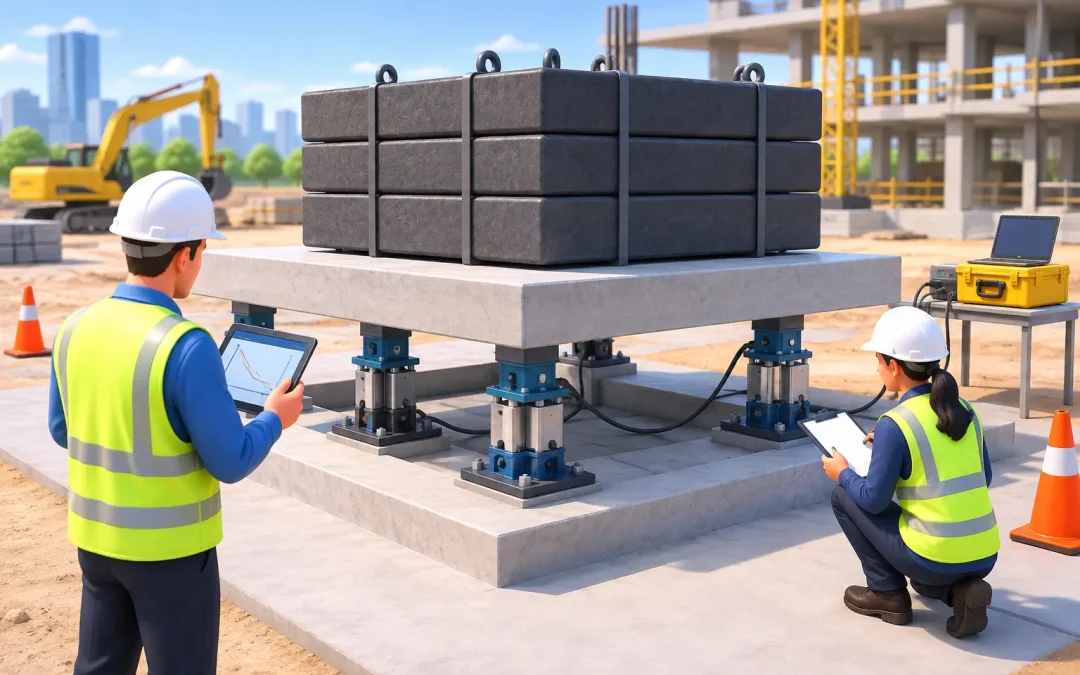
The item is then placed in a controlled test arrangement. Depending on the application, the load may be applied with calibrated test equipment, weights, hydraulic systems, or a specialized fixture. The required test load and hold time are determined by the applicable requirement, not by guesswork or a one-size-fits-all field practice.
During and after the test, the equipment is checked for signs of permanent deformation, cracking, instability, damaged welds, or other unacceptable changes. When it meets the required criteria, certification documentation is prepared to identify the tested equipment, test details, date, and result.
The certificate should be clear enough for a customer, site inspector, or safety representative to understand what was tested. Equipment identification is especially important. A certificate that cannot be matched to the item on site may create more questions instead of solving the compliance issue.
Avoiding Delays During a Load Testing Inspection
Most avoidable delays come from incomplete information, inaccessible equipment, or a mismatch between the requested test and the project requirement. A quick review before scheduling can prevent all three.
First, verify the rated capacity and configuration. A device tested in one configuration may not be approved for a different configuration, attachment method, or capacity. Second, identify the governing requirement. The customer may need a specific certificate format, test load, witness, tag, or supporting documentation. Third, make sure the equipment is complete and available at the scheduled time.
It also helps to separate equipment that is ready to test from equipment that needs repair, cleaning, identification, or engineering review. Trying to test questionable equipment simply to meet a deadline can cost more time than addressing the issue first. A good testing partner will tell you when an item is not ready instead of producing paperwork that will not hold up under inspection.
Mobile Testing Keeps Work Moving
Hauling heavy lifting equipment to an off-site facility can add transportation cost, handling risk, and lost time. For many San Diego projects, mobile service is the more practical option. The testing equipment comes to the yard, fabrication shop, port facility, construction site, or industrial plant, allowing the work to be coordinated around the actual project schedule.
Pacific Load Testing provides on-site proof load testing and certification support for lifting-related equipment and project requirements. The focus is straightforward: get the required testing completed, provide usable documentation, and help crews get approved equipment back into service.
Fast service does not mean cutting corners. The right approach is to confirm what the job requires, set up the test correctly, document the result clearly, and communicate early if an issue needs correction. That protects the crew, the project, and the person signing off on the work.
Before your next critical lift, pull the equipment records, verify the site requirement, and schedule testing before the inspector is waiting on it. A completed certificate is far easier to manage than a stopped job.