
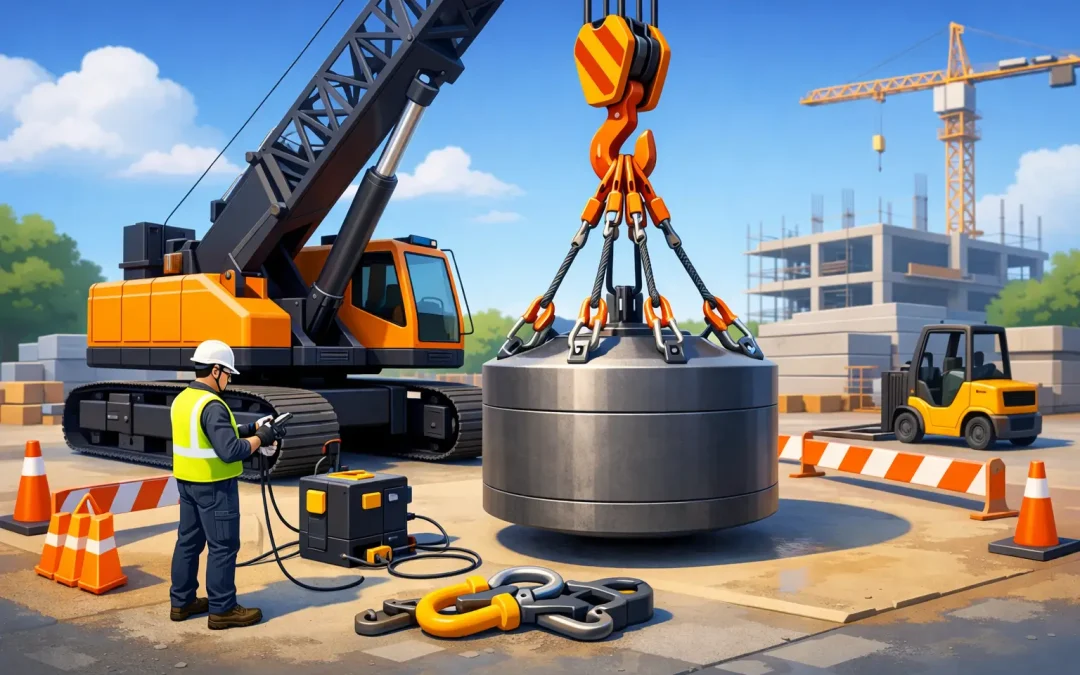
A failed inspection rarely comes from one big surprise. More often, it comes from missing paperwork, an unverified lifting setup, or a rigging assembly that cannot be cleared for use. That is where rigging proof load testing matters. When a jobsite needs documented confirmation that rigging gear or a lifting system can handle the required load, testing is not a formality – it is what keeps the schedule from stalling.
For contractors, rigging crews, maintenance teams, and marine operators, the real issue is time. Equipment may be ready, crews may be on site, and the lift plan may be approved, but without the right certification, work can stop cold. Proof load testing gives you the documentation inspectors, owners, and safety teams expect before equipment goes into service.
What rigging proof load testing actually verifies
Rigging proof load testing is a controlled test that applies a specified load to rigging equipment or an assembled lifting system to confirm it performs as required under test conditions. The goal is not to guess whether gear is serviceable. The goal is to document that it has been tested to an established proof load and is fit for its intended use, subject to the applicable standard, design, and inspection criteria.
That can apply to individual components, such as below-the-hook devices and lifting attachments, or to assembled systems used in the field. The exact test method depends on what is being tested, the governing requirement, and how the equipment will be used. A spreader bar, pad eye, custom lifting frame, or special rigging arrangement may all require different handling.
This is where experience matters. Not every lifting setup should be treated the same way, and not every request for testing is based on the same standard. Some customers need certification for a new fabrication. Others need recertification after repair, modification, or inspector review. In each case, the test has to match the actual compliance requirement.
Why inspectors ask for rigging proof load testing
On many projects, especially in construction, industrial plants, utilities, ports, and marine environments, proof load testing is required before approval for use. That requirement usually comes from one of three places: a code or standard, an engineer or owner specification, or a site safety and inspection process.
Inspectors are not just looking for a tag or a verbal assurance that the gear is strong enough. They want objective documentation. They want to see that the item was tested, that the test load was appropriate, and that the result was recorded. If the equipment is custom, altered, repaired, or being used in a high-consequence lift, scrutiny tends to increase.
That is why delayed testing creates bigger problems than most crews expect. Once an inspector flags missing certification, the fix is rarely instant unless a qualified provider can respond quickly. The longer the equipment sits unapproved, the more the project schedule starts to slip.
When proof load testing is typically needed
A lot of customers call only after they are told testing is required. That is common, but it is not ideal. In practice, rigging proof load testing is often needed when custom lifting devices are fabricated, when lifting points are added to equipment, when repaired gear must be returned to service, or when a project submittal package requires test certification before mobilization.
It is also common before first use of specialty lifting assemblies, during periodic certification programs, and after damage or overloading events that raise questions about continued serviceability. In some cases, the equipment itself is fine, but the owner, GC, or third-party inspector still requires documented proof testing before sign-off.
The details matter here. A repaired beam clamp is not the same as a newly fabricated lifting lug arrangement. A spreader beam used in a routine application is not the same as a custom frame being used in a tight, engineered lift. Testing should reflect those differences rather than forcing every item into the same process.
The jobsite value is speed, not just compliance
Most crews already understand the safety side. What often gets overlooked is the operational value. Fast, accurate rigging proof load testing keeps equipment from sitting idle and helps projects clear inspections without unnecessary back-and-forth.
That matters on active jobs where delays ripple through other trades. If a crane is scheduled, steel is staged, and the lift window is tight, waiting days for certification can cost far more than the test itself. The same applies in plant maintenance shutdowns and port operations, where every hour of downtime has a measurable impact.
This is why mobile service makes a difference. When testing can be handled where the equipment is located, teams avoid transport delays, extra handling, and the logistics problems that come with moving large or awkward assemblies off site. For high-pressure schedules, that convenience is not a bonus. It is part of staying on track.
What a good testing process looks like
A reliable testing process starts before the load is ever applied. The equipment has to be identified correctly, the required proof load has to be confirmed, and the test setup has to be appropriate for the item being certified. That includes understanding rated capacity, intended use, and any standard or engineering requirement tied to the equipment.
From there, the item is inspected, the test is conducted under controlled conditions, and the result is documented. If the equipment passes, the certification package should clearly show what was tested, when it was tested, and the load applied. If something does not pass, the customer needs a straight answer on why and what comes next.
That last point matters. Good testing is not just about issuing paperwork. It is also about catching problems before equipment goes into service. If there is deformation, weld concern, poor fabrication, damaged hardware, or an issue with the assembly itself, it is better to find it during a controlled test than during a live lift.
Common misunderstandings that cause delays
One common mistake is assuming a manufacturer rating is enough for every inspection. Sometimes it is. Sometimes it is not. If the item is custom fabricated, modified, repaired, or assembled for a specific application, an inspector may still require proof load documentation.
Another mistake is waiting until the inspection is already scheduled. By that point, options may be limited, especially if the equipment is large, fixed in place, or part of a coordinated lift plan. Early coordination usually saves time, but when that does not happen, responsive field service becomes critical.
There is also confusion between visual inspection and proof load testing. A visual inspection can identify obvious wear, damage, or fabrication issues, but it does not replace a required proof test. Both may be necessary, and one does not automatically satisfy the other.
Choosing a provider for rigging proof load testing
If you need rigging proof load testing, the provider should understand field conditions, documentation requirements, and the urgency that comes with inspection holds. This is not a service where generic capacity claims are enough. You need a team that can evaluate the rigging or device in front of them, set up the test correctly, and issue usable certification without creating more delay.
For San Diego contractors and industrial operators, that usually means looking for a company that can work on site, communicate clearly, and move fast when a project is waiting. Pacific Load Testing is built around that reality. The focus is simple: get to the site, perform the test, provide the documentation, and help keep the job moving.
Not every test request is straightforward. Some jobs involve custom fabrications, limited access, unusual load paths, or inspection pressure from multiple parties. That is exactly why speed has to be paired with competence. Fast paperwork is useless if the test does not meet the actual requirement.
Rigging proof load testing is easier to schedule before it becomes urgent
The best time to handle proof load testing is before the equipment becomes the reason a lift gets delayed. If you know a custom device, lifting point, or rigging assembly will need certification, getting ahead of it gives you more flexibility and fewer surprises.
But jobsites do not always run that cleanly. Fabrication finishes late. Inspectors raise last-minute questions. Equipment gets repaired in the middle of a schedule crunch. When that happens, the right testing partner is the one that can respond quickly, work in the field, and give you documentation that stands up when it counts.
If your equipment needs to be cleared for use, the goal is simple: get it tested correctly, get it documented, and get your crew back to work.