
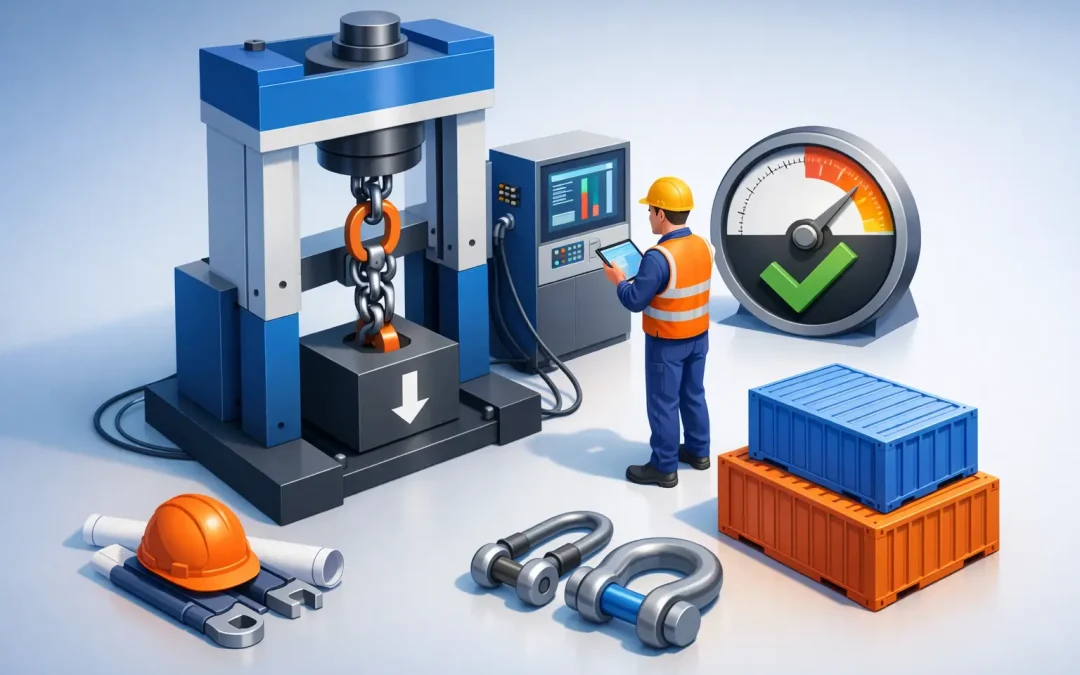
If an inspector asks for proof load certification before a lift goes live, the question usually stops being academic fast. What is proof load test? It is a controlled test that applies a specified load to lifting equipment, rigging hardware, or a structural lifting point to verify it can handle the required capacity and meet documented compliance requirements.
For contractors, rigging crews, maintenance teams, and project supervisors, that matters because a failed inspection can stall a job even when the equipment looks fine. Proof load testing is not about guessing whether something seems strong enough. It is about documented verification under a defined test load, performed to the applicable requirement, with paperwork that stands up when the jobsite, owner, or authority asks for it.
What is proof load test in practical terms?
In plain jobsite terms, a proof load test is a pass-fail verification of capacity. A piece of equipment or a lifting component is subjected to a predetermined load – often based on a percentage above its rated working load, depending on the applicable standard or project requirement – and then inspected for signs of deformation, damage, or other failure.
The goal is not to destroy the item. This is different from ultimate load or destructive testing, where the purpose is to find the point of failure. In a proof load test, the purpose is to confirm that the item can safely sustain a required test load without permanent damage and with documentation to prove it.
That distinction matters on active projects. Most customers are not looking for a lab exercise. They need a certified result that satisfies inspection requirements and keeps equipment approved for use.
What gets proof load tested?
Proof load testing is commonly used for lifting-related equipment and load-bearing components where capacity has to be verified, not assumed. That can include spreader bars, padeyes, lifting beams, hoists, cranes in certain applications, rigging assemblies, below-the-hook devices, anchor points, and custom fabricated lifting attachments.
It is also common when equipment has been newly fabricated, modified, repaired, relocated, or called out by a project specification. In some cases, the test is required before first use. In others, it comes up after a repair, after an incident, or when an inspector or owner representative wants current certification before sign-off.
This is where job conditions matter. Two lifting devices may look similar, but if one was repaired, altered, or built for a special project, the required testing and documentation may be very different.
How a proof load test usually works
The exact procedure depends on the item being tested, the governing standard, and the site conditions. But the general process is straightforward.
First, the equipment is identified and reviewed. Capacity, configuration, fabrication details, prior certifications, and any project-specific requirements are checked. If the device is custom or lacks clear documentation, that has to be addressed before testing starts.
Next comes the test setup. The equipment is arranged so the required load can be applied in a controlled manner. That may involve calibrated test weights, hydraulic systems, load cells, support structures, or other test apparatus. The method has to match the type of equipment and the conditions under which it will be used.
Then the proof load is applied and held as required by the specification. During and after the test, the equipment is inspected for any sign that it did not perform properly. Excessive deflection, cracking, distortion, or permanent set can all be red flags.
If the item passes, the result is documented. That paperwork is often the reason the test was needed in the first place. Without clear certification records, a successful test may still not satisfy the inspector or project file.
Why proof load testing is required
Most customers ask for proof load testing for one of three reasons: compliance, safety, or approval.
Compliance is the obvious one. Owners, engineers, inspectors, and safety personnel often require documented proof that a lifting device or component meets the specified load requirement. If the project documents call for a proof load test, there is not much room for interpretation.
Safety is the reason behind the paperwork. Lifting equipment works in high-consequence conditions. If a padeye, beam, or rigging component fails under load, the result can be damaged equipment, lost time, injury, or worse. Proof load testing reduces uncertainty by verifying real-world performance under a controlled test load.
Approval is the day-to-day jobsite reality. A lot of equipment gets held up not because anyone knows it will fail, but because nobody has the current certification to prove it is acceptable. The test and the documentation remove that bottleneck.
What proof load testing does not tell you
A proof load test is valuable, but it is not a blanket guarantee that an item will be safe forever in every condition. It confirms performance at the time of the test, under the specific test setup and loading criteria used.
It does not replace regular inspection, proper rigging practices, operator training, or capacity limits in service. It also does not automatically cover misuse, side loading, shock loading, corrosion after the test date, or field modifications made later.
That is where some jobsite confusion starts. A passed proof load test does not mean crews can ignore wear, damage, or changing conditions. It means the item met the defined test requirement and was documented accordingly.
Proof load test vs. inspection
Inspection and proof load testing work together, but they are not the same thing. An inspection is a visual and functional review for wear, damage, missing markings, deformation, or other conditions that affect safe use. A proof load test adds a controlled load application to verify the component can handle the required capacity.
Sometimes an inspection alone is enough. Sometimes a proof load test is mandatory. It depends on the equipment, the code or standard involved, the repair history, and the project requirement.
For example, if a custom lifting lug was fabricated for a one-off industrial pick, an engineer or inspector may require proof load testing before approving it for service. On the other hand, a standard off-the-shelf component with current manufacturer documentation and no changes may not need additional testing unless the project specifically calls for it.
When a proof load test is typically needed
There is no single rule that covers every site, but proof load testing often comes up after fabrication, after repair, after modification, before initial use, or when ownership or location changes trigger a new approval process. It also comes up when existing documentation is missing, outdated, or rejected by the authority reviewing the job.
Marine, port, construction, and industrial maintenance environments see this often because lifting points and below-the-hook devices are exposed to hard use, field changes, and inspection scrutiny. If the schedule is tight, waiting until the inspector asks for the paperwork is usually the expensive way to find out testing was required.
That is why mobile field service matters. When testing can happen where the equipment is located, project teams avoid extra transport delays and can move faster from verification to certification. For San Diego contractors and operators working against shutdown windows or inspection deadlines, that speed can make the difference between staying on schedule and losing a day.
What to have ready before scheduling testing
The faster the test provider can verify what the item is, what standard applies, and what capacity must be proven, the smoother the process goes. Good photos, nameplate information, drawings, prior test certificates, repair records, and project specifications all help.
If the equipment is custom fabricated, that should be stated upfront. If it has been altered or repaired, say so early. Those details are not minor. They affect the test method, the required load, and the final documentation.
It also helps to be clear about the actual reason for the test. Are you meeting a project submittal requirement, satisfying an inspector, recertifying after repair, or approving a new lifting device for service? The answer shapes the scope and the paperwork.
Why documentation is half the job
On most jobs, the certificate is what keeps the work moving. The physical test proves performance, but the documentation is what gets reviewed, filed, and accepted.
A proper certification record should clearly identify the item tested, the test load applied, the date, and the result. If any of that is vague, the paperwork may not hold up under review even if the equipment passed. That creates the kind of avoidable delay nobody wants on an active site.
Pacific Load Testing is built around that reality. The work is not just applying a load. It is delivering usable certification with fast turnaround so contractors and operators can get approved and get back to work.
If you are asking what is proof load test, the short answer is this: it is the documented load verification that turns a lifting component from a question mark into something an inspector can approve. And when the job is waiting on that approval, getting the test done quickly and correctly is not just helpful – it is part of keeping the whole project moving.