
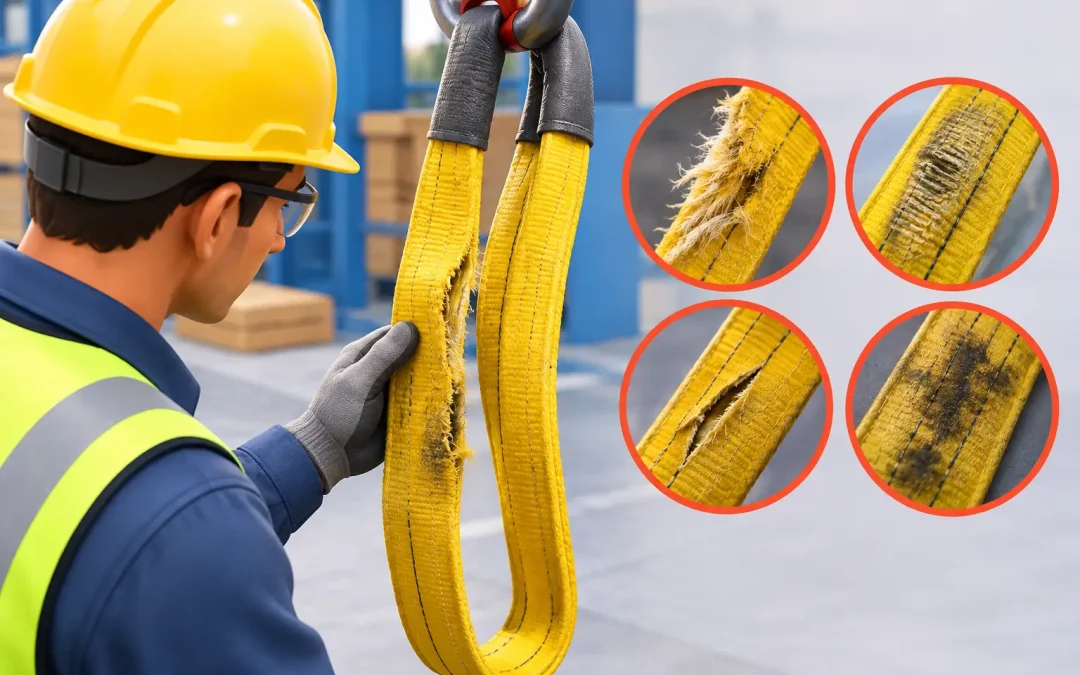
A sling can look serviceable from a few feet away and still be one lift away from failure. Catching sling damage signs during the pre-use inspection protects the crew, the load, and the schedule. It also prevents a failed inspection from stopping work when equipment certification or proof load documentation is needed.
The rule on a working jobsite is simple: if a sling has damage that calls its capacity or integrity into question, remove it from service. Do not try to work around it, cover it up, or assume it will get through one more pick. Set it aside, tag it clearly, and have a qualified person determine whether it can be repaired by an authorized provider or must be destroyed.
Why Sling Damage Cannot Wait
Slings do not usually fail without warning. Most failures start with conditions that are visible during a proper inspection: a cut in synthetic webbing, a broken wire in a wire rope sling, stretched chain links, or a bent hook. The danger is that the sling may still hold light loads, which can create false confidence until a heavier or shock-loaded lift exposes the damage.
A damaged sling also creates a documentation problem. Inspection records, equipment registers, and project safety requirements all depend on knowing which gear is approved for use. When questionable gear remains mixed with inspected equipment, crews lose time sorting it out under pressure. Removing damaged gear immediately keeps the inspection process clean and keeps unsafe equipment off the hook.
Sling Damage Signs on Synthetic Web Slings
Synthetic web slings are common because they are flexible, light, and less likely to mark finished surfaces. They are also vulnerable to cuts, abrasion, heat, chemicals, and edge damage. A sling that contacts a sharp corner without proper protection can lose strength quickly, even if the outer surface does not look severely damaged at first glance.
Look closely along the full length of the webbing, not just at the eyes. Cuts, tears, snags, punctures, and broken stitching are clear reasons to stop and evaluate the sling. Frayed edges matter too. Minor surface fuzz may occur with use, but deep abrasion that exposes or weakens load-bearing fibers is not normal wear.
Pay attention to discoloration, stiff areas, glazing, melting, or a hard, brittle feel. These can point to heat exposure, welding spatter, chemical contact, or ultraviolet deterioration. A sling that has been exposed to an unknown chemical should not be put back into rotation based on appearance alone. Chemical damage can reduce strength before the sling shows obvious physical failure.
Check identification tags as carefully as the webbing. If the tag is missing or unreadable, the sling’s rated capacity and material type cannot be verified. That sling should be removed from service until its status is resolved. A sling without legible identification is not ready for a compliant lift.
What to Look for on Wire Rope Slings
Wire rope slings handle demanding work, but they require close inspection because damage can hide in the lay of the rope and around end fittings. Run a gloved hand carefully along the rope and inspect it under good light. Do not slide bare hands across wire rope, since broken wires can cause injury.
Broken wires, flattened areas, kinks, birdcaging, crushing, and severe abrasion are warning signs. A kink permanently damages the rope structure, even if it appears to straighten out. Birdcaging, where strands separate and flare outward, indicates that the rope has been distorted and should not be treated as cosmetic damage.
Inspect eyes, sleeves, thimbles, sockets, and mechanical fittings for cracking, movement, corrosion, deformation, or broken components. End connections carry the load just as much as the rope itself. If a fitting is loose, distorted, or shows signs of pulling out, remove the sling from service.
Corrosion deserves more than a quick visual check, especially for marine, port, and coastal work around San Diego. Surface rust may be manageable depending on its extent and the sling manufacturer’s criteria, but pitting and internal corrosion can reduce rope strength. When corrosion is significant or the sling’s condition is uncertain, do not guess.
Chain Sling and Hook Damage Signs
Alloy chain slings are built for tough environments, but they can be damaged by overload, improper storage, heat, corrosion, and side loading. Inspect every link for stretching, nicks, gouges, cracks, twists, and weld spatter. A link that appears elongated or no longer matches the shape of adjacent links may have been overloaded.
Do not overlook the hooks. A hook with a widened throat, a bent point, a twisted body, or a damaged safety latch needs immediate attention. The latch is not the primary load-bearing component, but it helps prevent the sling or load from unintentionally coming free. If it does not close and seat properly, the hook is not ready for use.
Master links, coupling links, and shortening devices also need inspection. Look for distortion, excessive wear, cracks, and unauthorized modifications. Field welding, heating, grinding, or straightening of chain sling components can change their properties and must not be treated as an acceptable repair.
Check Hardware, Not Just the Sling Body
Shackles, hooks, rings, and other connection hardware are part of the lifting system. A sound sling connected to damaged hardware is still an unsafe setup. Verify that pins are correct for the shackle body, fully engaged, and not bent, worn, or substituted with a bolt or other improvised part.
Inspect for cracks, thread damage, bow deformation, excessive wear at bearing points, and missing identification markings. Side loading is a frequent source of damage. A shackle or hook may be rated for a straight-line load but lose capacity when loaded at an angle. The rigging arrangement, sling angle, and connection points must match the manufacturer’s instructions and the lift plan.
Also inspect for signs of unauthorized repair. Fresh paint can hide defects, and grinding marks may indicate an attempt to remove damage. If the history of a component is unknown, or its markings cannot be read, take it out of service until a qualified person can assess it.
Build a Pre-Use Inspection Into the Lift
The best time to find damage is before the rigging is installed. The person using the sling should conduct a pre-use inspection at the start of the shift and before a lift when conditions have changed. Formal periodic inspections are also required on an established schedule, but they do not replace the crew’s day-to-day responsibility to check the gear in hand.
A practical inspection starts with the identification tag or marking, then moves from one end of the sling to the other. Check the body, eyes or end fittings, hooks, hardware, and any areas that contact the load. Inspect under adequate lighting and clean off mud, grease, paint buildup, or debris that could hide defects.
Do not inspect in isolation from the planned lift. A sling may be physically intact but still unsuitable because its capacity does not cover the load, the sling angle reduces its working load limit, or the load has sharp edges requiring protection. Condition and application both matter.
When to Remove a Sling From Service
When damage is found, make the decision clear. Take the sling out of use, mark it so no one grabs it from the rigging rack, and separate it from approved equipment. A verbal warning is not enough on a busy jobsite.
Then document what was found and route the sling for qualified evaluation. Some components may be eligible for authorized repair and recertification. Others must be destroyed to prevent accidental reuse. The answer depends on the sling type, manufacturer requirements, the extent of damage, and applicable inspection criteria.
This is where fast, organized support matters. Pacific Load Testing helps contractors and industrial operators keep lifting equipment documentation current through responsive proof load testing and certification service. When a project inspector needs records before approving equipment for use, having clear inspection status and current paperwork can prevent avoidable downtime.
Keep damaged slings out of the lift plan, keep approved gear identifiable, and address certification needs before the inspector is standing at the gate. That discipline keeps the crew focused on the work, not on a preventable shutdown.