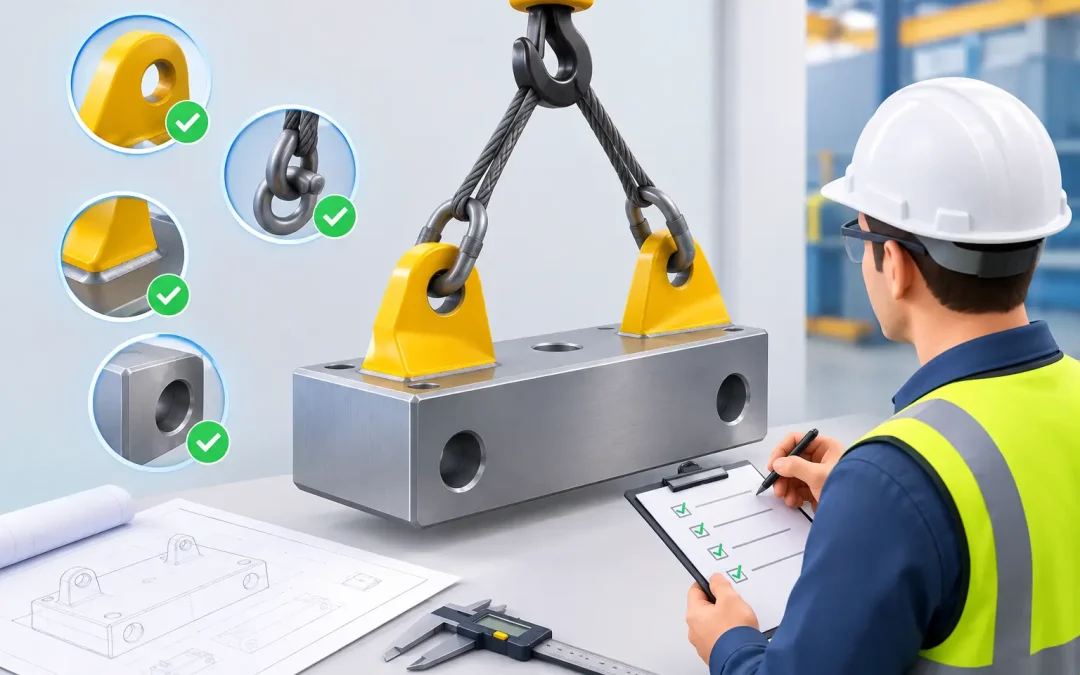
 A lifting lug can look simple on a fabrication drawing: a plate, a hole, a weld, and a stated capacity. On the jobsite, lifting lug design carries much more responsibility. The lug must transfer the actual lifting forces into the structure without yielding, tearing,...
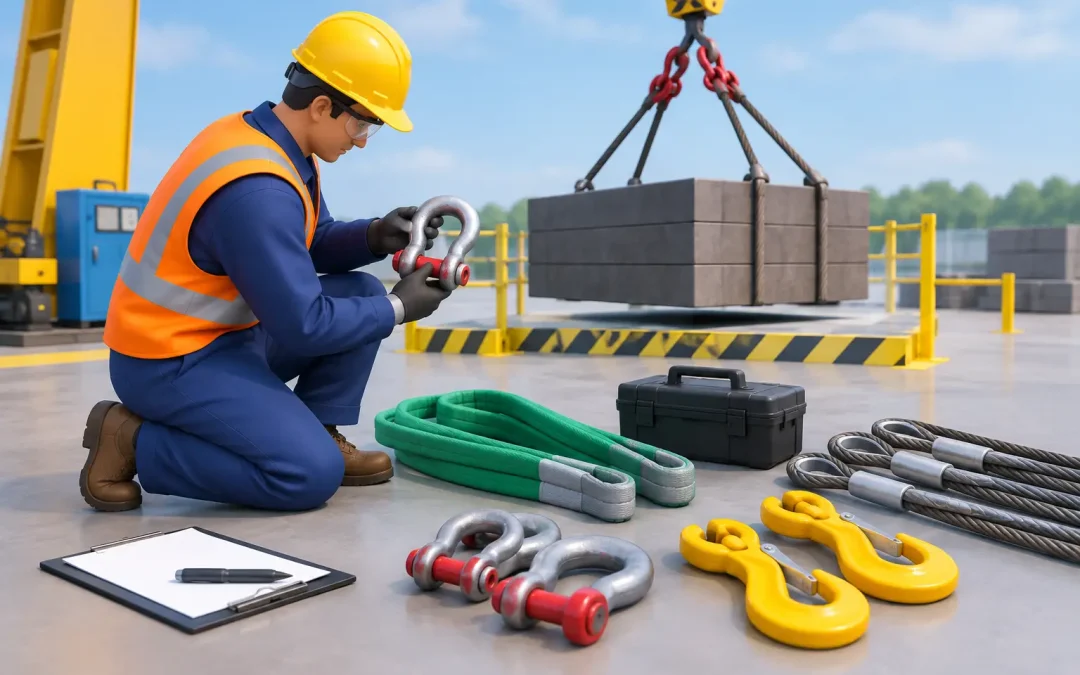 A missed tag, a bent hook latch, or a sling that arrives packed with jobsite debris can stop a proof load test before it starts. Knowing how to prepare lifting gear before testing helps your crew avoid wasted time, failed inspections, and last-minute schedule changes....
 A failed inspection can hold up a pick, delay a turnover, and leave a crew waiting on paperwork instead of working. A clear equipment certification process prevents that scramble by confirming that lifting equipment has been tested, documented, and prepared for the...
 A lifting point can look ready, be welded in place, and still stop a job cold when the inspector asks for documentation. The top lifting point certification issues usually come down to one problem: the installed condition, the rated capacity, and the paperwork do not...
 A below hook inspection can be the difference between a lift that proceeds on schedule and a load that sits while the crew chases answers. Spreader beams, lifting beams, plate clamps, lifting magnets, C-hooks, personnel platforms, and custom lifting devices all need...
 A current load test certificate does not give a shackle, spreader beam, lifting lug, or rigging assembly a lifetime pass. So, can load tested equipment expire? The practical answer is yes, but usually not in the simple sense of an expiration date stamped on the...
 An inspector should not be the first person to discover that a certification is missing, a tag is unreadable, or a piece of lifting gear has been swapped since its last test. Those details can stop a lift, delay an inspection sign-off, and put a crew behind schedule....
 A failed inspection does not care whether a piece of lifting equipment is sitting at your yard or already installed on the job. What matters is whether it has been proof tested, documented, and approved when the work needs to start. That is why mobile load testing vs...
 A pad eye can look like a simple welded lifting point until an inspector asks for proof load documentation and the lift cannot proceed without it. This guide to pad eye testing covers what project teams need to verify before testing, what happens during the test, and...
 A project can be ready to lift, but it is not ready to work until the required documentation is in hand. So, who performs proof load certification? A qualified load-testing provider performs the test, records the results, and issues documentation that supports the...
